To choose a towing company in Des Moines, look for one that is licensed and insured, locally based with a real address and phone number, equipped for your specific vehicle, and upfront about how it prices a tow. The clearest sign of a fair operator is often what they will not do: an honest company does not snatch cars from private lots, and it will not quote you an exact price before seeing the situation. What a tow costs depends on distance, the size and weight of your vehicle, and whether it is a simple tow or a recovery, so expect an itemized estimate, not a flat number over the phone. Get these things right ahead of time and you will not be at the mercy of whoever happens to answer first when you are stranded on the shoulder of I-235.
Key Takeaways
- The right towing company is licensed and insured, locally based with a real address, and equipped for your specific vehicle.
- Honest pricing is itemized and based on distance, vehicle size, and whether it is a straight tow or a recovery. No honest company quotes an exact price sight-unseen.
- Be cautious of any company that does private-property impound. Most of the predatory reputation in towing comes from that work.
- Calling a local company directly often means faster, clearer service than routing through an app or an insurer’s line.
- Hanifen has served Des Moines since 1923, runs the area’s largest established fleet, and does not do private-property impound.
What should you look for in a towing company?
The time to pick a tow company is before you need one, when you can think clearly instead of standing on a shoulder in the cold. The single biggest divider in this trade is simple: honest operators versus the ones who treat a stranded driver as an opportunity. Almost everything below flows from that one line. The people who call us after dialing six other numbers hunting only for the lowest quote are often the ones who call back later, because the cheapest price on the phone has a way of becoming the most expensive bill once a surprise fee turns up. Here is what actually separates a company worth saving from one to avoid.
- Licensed, insured, and traceable. A real company has a physical address, a published phone number, and proper insurance. For commercial or heavy jobs you can verify a carrier’s federal registration and safety record for free through the FMCSA SAFER Company Snapshot using their USDOT number.
- Local, not a regional dispatch footprint. A company actually based in the metro knows the roads, the interstates, and the weather, and it tends to get to you faster than an operation routing trucks in from another county.
- The right equipment for your vehicle. A flatbed for a low car is not the same truck as a heavy wrecker for a loaded semi. A deep, varied fleet means the right truck shows up the first time.
- Around-the-clock service. Trouble does not keep office hours. Look for genuine 24/7 towing and recovery, not a voicemail after 5 p.m.
- Honest, itemized pricing. A fair company explains what drives the cost and puts the charges in writing. Be wary of anyone who dodges the question or promises a suspiciously exact number before seeing the job.
- Real reviews and a real reputation. Read what local customers actually say, and weigh consistency and recent reviews over a raw star count. A long, steady local track record is harder to fake than a big number.
- Secure storage. If your vehicle has to be held, you want it on a secured, monitored lot, not parked loose somewhere.
- A line they will not cross. The best tell is whether a company does predatory private-property impound. The ones that do not are the ones least likely to take advantage of you.
How much does a tow cost in Des Moines, and what drives the price?
Anyone who quotes you an exact price over the phone before seeing the situation is guessing, and the guess usually is not in your favor. A fair tow is priced on a handful of honest variables, and a good company will walk you through them.
- Distance. Most tows include a base hook-up charge plus a per-mile rate, so a cross-town tow and a tow to the next county are not the same bill.
- Vehicle size and class. A light-duty car costs less to move than a medium-duty truck, and a loaded semi is a different category entirely.
- Straight tow versus recovery. Loading a car from a parking spot is simple. Pulling a vehicle out of a ditch, uprighting a rollover, or winching something off-road takes more equipment, time, and crew.
- Time and conditions. After-hours calls, bad weather, and heavy traffic can affect what a job takes.
- Special handling. A low-clearance or classic car that needs a flatbed with air-bag lowering, a motorcycle, or an oversized load calls for specific equipment.
- Storage. If the vehicle has to be held, storage is usually charged by the day, which is one more reason to reclaim it quickly.
So while no honest company can hand you a flat number sight-unseen, you can absolutely know what a fair tow looks like. A straightforward bill is usually a base hook-up charge plus a per-mile rate, with recovery work billed for the extra time and equipment it takes. Before you agree to anything, ask three plain questions: what is the hook-up fee, what is the per-mile rate, and is there a storage charge if the vehicle has to be held. A company that answers those clearly is one you can trust. A company that dodges them is telling you something. You should get that estimate up front and an itemized bill afterward, and whether insurance covers part of it is worth sorting out before you are ever stranded. [CONFIRM: add a typical local price range here only if Hanifen approves publishing one.]
Does insurance cover towing?
Sometimes, and it depends on your policy. Towing is often covered when you have added roadside assistance, or when the tow follows a covered accident under collision or comprehensive coverage. Basic liability usually does not cover towing your own vehicle, and many roadside plans cap the distance or the dollar amount they will pay, so a long tow or a recovery can still leave you with part of the bill. Using an insurer’s roadside line may also limit which company comes and where your vehicle goes. We walk through the trade-offs in detail in our guide on paying out of pocket versus using insurance for a tow. The short version: read your policy before you need it, and keep the number of a company you trust either way.
Should you call a local company, an app, or your insurer’s roadside line?
When you are stranded, there are really three ways the call goes. You can call a local towing company directly, you can use a roadside app or motor-club dispatcher, or you can call your insurer’s roadside line and let them arrange it.
The app and insurer routes can be convenient, and if your plan covers the tow, they can save you money. The catch is that those services usually do not own trucks. They route your job to whatever company is available, which means you do not choose who shows up, how your vehicle is handled, or where it ends up, and a layer of dispatch can slow things down. Calling a local company directly puts you back in control of all three. For a simple light-duty tow the difference may be small. For a recovery, a heavy vehicle, or a car you care about, knowing exactly who is coming is worth a lot.
How do you know a company can handle your vehicle?
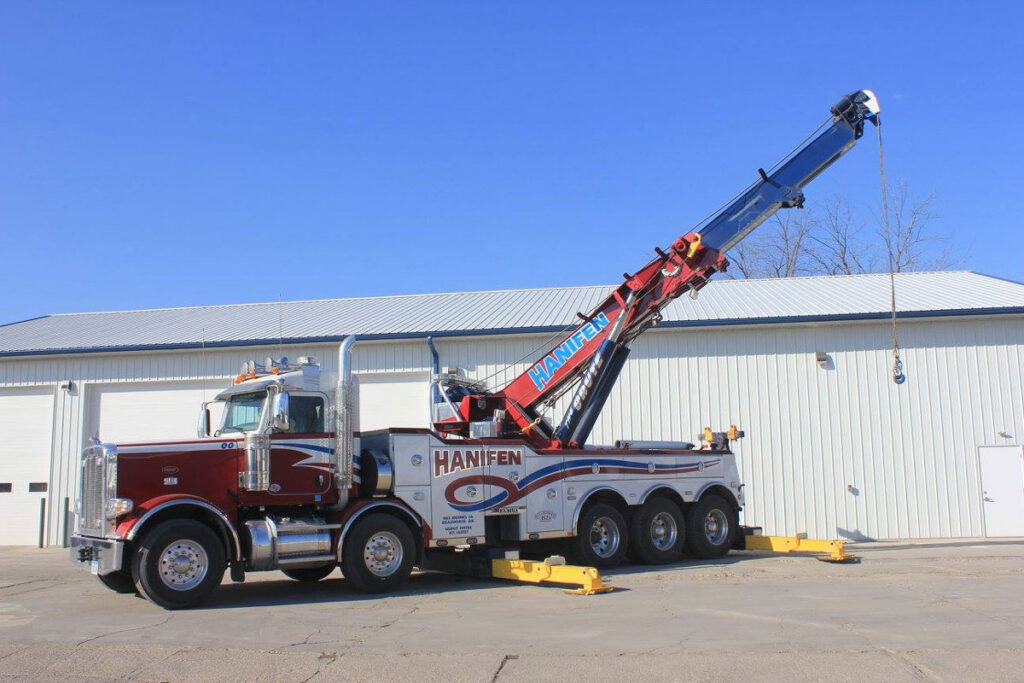
Matching the truck to the job is most of what good towing is, and it is where a deep fleet earns its keep. A few common cases:
- Everyday cars and pickups. A light or medium-duty flatbed or wheel-lift handles most daily tows.
- Low, classic, or exotic cars. A low car needs a flatbed that lowers so the undercarriage does not scrape on loading. Ask specifically whether the truck can do that.
- Semis and heavy trucks. A loaded tractor-trailer needs a heavy wrecker, and a rolled or pinned rig may need a rotator.
- Equipment and oversized loads. Construction or farm machinery, containers, and other big loads move on Landoll trailers and heavy-haul equipment, not a standard flatbed.
- Accidents and off-road recoveries. A vehicle in a ditch, in water, or rolled over is a recovery, which is different work than a straight tow.
This is not about showing off a big fleet. It is about the right truck arriving the first time. When a light wrecker rolls up to a job that needed a heavy one, somebody pays for the second call, and that somebody is usually you. A pickup nosed into a ditch off a county road after an ice storm is not a straight tow, it is a recovery, and a crew that does it every Iowa winter knows that before they leave the yard. If a company cannot tell you plainly which truck it would send for your situation, that is your answer.
How do you avoid predatory or unfair towing?
Predatory towing is the small slice of the trade that gives the whole industry a bad name, and it almost always happens on private property, not at a police-directed accident scene. The warning signs are a car snatched off a lot with no posted signs, a refusal to release a vehicle even when you show up to claim it, cash-only demands with no itemized receipt, and a vehicle hauled to a distant lot that runs up the bill. Iowa’s statewide rules leave a lot of room here, so the company that ends up with your vehicle matters. If your car is towed after a crash or by police order, you do have rights to notice, to your belongings, and to reclaim the vehicle, set out in Iowa Code 321.89. For the full breakdown, see our guide to your rights during a non-consent or accident tow in Iowa.
Where does Hanifen fit in all this?
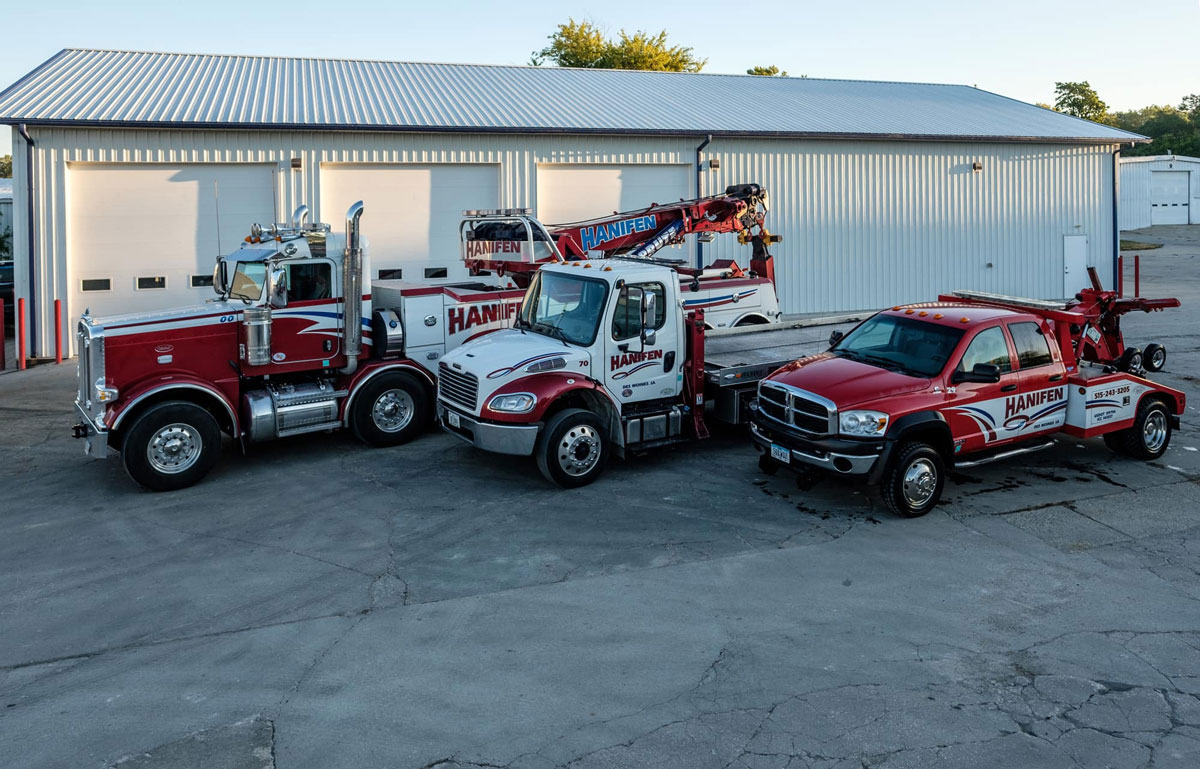
Hanifen Towing has run on a simple promise since 1923: we take care of people in a timely way, at a fair price, and we do not take advantage of anyone who is already having the worst day. We are a family-run, Des Moines company, the oldest and largest established towing operation in the area, with the deepest local fleet, from light-duty flatbeds to heavy wreckers and a 75-ton rotator, and a secured Des Moines yard with camera security for vehicles we hold. We run towing and recovery around the clock, we price the work honestly, our local reviews reflect that, and we do not do private-property impound. We would rather earn the call than trap it. That is the standard this guide describes, and it is the one we hold ourselves to.
Frequently Asked Questions
What is the most important thing to check before calling a tow company?
That it is a real, local, insured company with a physical address and the right equipment for your vehicle. A long local track record and honest, itemized pricing matter more than whoever shows up first in a search. Save the number before you need it.
Why will a good towing company not give me an exact price over the phone?
Because the honest price depends on details they cannot see yet: the distance, the vehicle, and whether it is a simple tow or a recovery. A company that promises a precise number sight-unseen is either guessing or setting up a surprise. Expect a clear estimate once they understand the job, and an itemized bill after.
Is it cheaper to use my insurance or pay out of pocket for a tow?
It depends on your policy and the tow. Roadside coverage can save you money but often caps distance or dollars and may limit which company comes. Paying out of pocket is faster and lets you choose the provider. Our guide on paying out of pocket versus insurance walks through both.
How do I find a towing company that can handle a heavy truck or equipment?
Ask directly about fleet and capability. Heavy and commercial work needs heavy wreckers, a rotator for rollovers, and Landoll trailers for equipment, which most light-duty operators do not have. A company should be able to tell you exactly which truck it would send.
Does Hanifen do private-property impound?
No. Hanifen does not perform private-lot or unauthorized-vehicle impound. We handle non-consent towing only through the state, such as accident scenes, which is a big part of why we can stand behind fair, honest treatment.
The simplest way to protect yourself is to decide now who you would call. If you are in the Des Moines metro and want a local team that has handled this work for over a century, save our number and reach us any time at 515-243-3205. For a scheduled tow, equipment transport, or to set up a commercial account, get in touch through our contact page. We are here to help.