
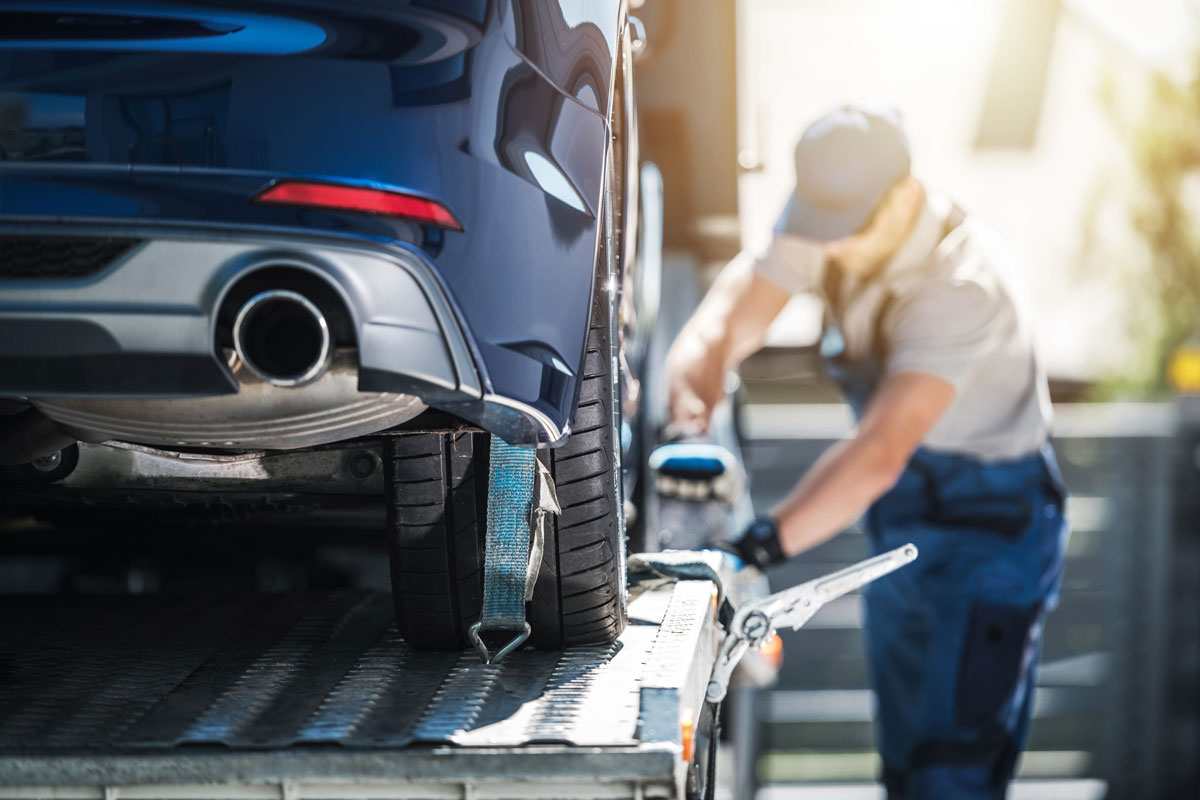
Iowa towing laws give you real rights when your vehicle is towed without your say-so, whether it happened after a crash or by police order. You have the right to find out where your vehicle was taken, to reclaim it and your belongings by paying the towing and storage charges, and to receive written notice of what you owe before anyone can sell it. The process is set out in Iowa Code section 321.89. Most predatory towing complaints come from private-property “trespass” tows, not police-directed accident tows, so the first thing that protects you is knowing which kind of tow you are dealing with. A non-consent tow is simply any tow you did not request yourself. Knowing your rights, and saving the number of a company that earns its reputation, keeps a bad day from getting worse.
Key Takeaways
- A non-consent tow is any tow you did not request yourself, including a police-directed tow after a crash.
- Iowa Code 321.89 gives you the right to written notice, the right to reclaim your vehicle and belongings by paying the charges, and a window before the vehicle can be sold.
- Most predatory towing happens on private property, not at police-directed accident scenes.
- Iowa’s statewide rules leave room for local variation, so the company that ends up with your vehicle matters.
- Hanifen does not do private-property impound. We handle non-consent towing only through the state, such as accident scenes.
What is the difference between a consent and non-consent tow?
A consent tow is the one you ask for. Your car will not start, you call a company, and you decide who shows up and where it goes. A non-consent tow is any tow you did not request, and there are two very different kinds. The first is a police-directed tow, usually after a crash or a vehicle left too long on a public road. The second is a private-property tow, where a lot owner has a vehicle removed for parking without permission.
People lump both together as “getting towed,” but the rules, and the odds of getting taken advantage of, are not the same. Almost every towing horror story comes from the private-property side, so knowing which one you are in tells you what to expect.
What happens to your vehicle after a crash in Iowa?
If you are in a wreck and your vehicle cannot be driven, the responding officer decides whether it has to be moved and who moves it. Around here that is often a winter call, a car slid off I-235 or into a ditch on a county road. In Iowa, the police authority controls custody of a vehicle taken from an accident scene, and that authority can use its own equipment or hire a private towing company. So the tow itself is usually not your choice in that moment, but you do not lose your rights to the vehicle.
Your job at the scene is to stay safe and get the basics: find out who is towing the vehicle and where it is going, take your registration, insurance card, and any valuables with you, and give the crew room to work. Iowa’s Move Over or Slow Down law requires drivers to change lanes or slow down for a stopped tow truck with its lights on, and the fine for ignoring it is $135 plus court costs. A roadside scene is one of the most dangerous places to stand, so that law protects the stranded driver and the crew both.
What are your rights, and how do you get your vehicle back?
When a vehicle is taken into custody, Iowa Code 321.89 spells out what has to happen, and it works in your favor if you act on it. Within 20 days, the police authority or the company holding the vehicle has to send certified-mail notice to the last registered owner and any lienholders, describing the vehicle, listing the personal property inside, and telling you where it is held. From there you can reclaim the vehicle and your belongings by paying the towing, storage, and notice costs. But you are on a clock: 10 days from the effective date of that notice, plus 5 more if you ask in writing before it runs out. Miss the window and the law treats it as giving up your claim, and the vehicle can be sold at auction or sent to a demolisher.
Getting it back is simpler than people fear. Find out where the vehicle is, bring a photo ID and the registration or title, and ask for an itemized statement with the tow charge and the daily storage charge written out, not a round number. Pay the charges, collect your belongings, and do not drag your feet, because storage adds up by the day. One term worth knowing is the garagekeeper’s lien: a company that tows and stores a vehicle can legally hold it for those charges until the bill is paid. That part is normal. A lot that refuses to give you a written breakdown, or stalls when you show up ready to pay, is not.
How do you spot predatory or “bandit” towing?
The call we field most often does not come from a highway accident. It comes from someone whose car was hauled off a private lot downtown during an event, who is now holding a release fee nobody warned them about. That is the face of predatory towing in Des Moines, and it almost always happens on private property, not at a police-directed scene. Hanifen has been towing in this city since 1923, and the patterns do not change. Watch for these:
- A vehicle snatched off a lot within minutes, with no clearly posted signs saying the lot tows and where the vehicle goes.
- A refusal to release the vehicle even when you arrive before it leaves the lot.
- Cash only, with no itemized receipt and no card accepted.
- A vehicle hauled a long distance to a hard-to-reach lot, which runs up both the tow and the storage.
- Vague or shifting fees, or a release fee that appears out of nowhere.
A police-directed accident tow looks different. There is a record of it, the officer knows who took the vehicle, and the company is working under the state’s process. If something still feels wrong, get every charge in writing, keep your photos and records, and take it to the police authority that logged the tow or the Iowa Attorney General’s consumer protection office. Documentation is your leverage.
What does Iowa law actually require?
Here is the honest part. Iowa Code 321.89 does a solid job on the back end: custody, notice, and your right to reclaim a vehicle. What Iowa does not have is a strong statewide rulebook for the front end of private-property towing. There is no statewide cap on what a private lot can charge for a non-consent tow, and signage and release practices can vary from one city to the next. Some Iowa cities have passed their own ordinances to fill that gap, and state lawmakers have introduced bills to add statewide protections like required signage and fee limits, but as of 2026 those have not become law.
The takeaway is that the law sets a floor, not a standard. Because the rules leave room, the company that ends up with your vehicle has a lot of say in how you get treated, which is the whole reason to know a fair operator from a predatory one before you ever need a tow. For anything specific to your situation, the official text of Iowa Code 321.89 and your local police authority are the sources to trust, since rules change.
Where does Hanifen fit in all this?
Hanifen Towing has run on a simple promise since 1923: we will not take advantage of people who are already having the worst day. Part of how we keep it is what we choose not to do. We do not do private-property impound, the lot-snatching work that drives most predatory complaints. We perform non-consent towing only through the state, such as accident scene recovery, and we store vehicles on our own secured Des Moines yard with camera security, not a hard-to-reach lot built to run up fees. As the oldest and largest established towing company in Des Moines, we would rather earn the call than trap it. For a fuller walk-through of picking the right company and what a fair tow looks like, see our guide on how to choose a towing company in Des Moines.
Frequently Asked Questions
How long do I have before my towed car can be sold in Iowa?
The certified-mail notice gives you 10 days from its effective date to reclaim the vehicle by paying the towing, storage, and notice charges, plus 5 more days if you ask in writing before the deadline. Miss the window and the law treats it as giving up your claim, and the vehicle can be sold at auction or sent to a demolisher.
Can my car be towed from a private lot without my permission in Iowa?
Yes, under certain conditions. A vehicle parked without the property owner’s permission can be removed, and Iowa leaves much of the detail to local rules and the property owner. That is exactly why private-lot tows are the area to watch, and why reading posted signs before you park is worth the few seconds it takes.
What should I do if I think I was towed illegally or overcharged?
Get an itemized statement of every charge, keep all your records and photos, and contact the police authority that ordered or logged the tow. For a private-property tow that feels predatory, the Iowa Attorney General’s consumer protection office is the place to raise it. The more documentation you have, the stronger your position.
Does Hanifen do private-property impound?
No. Hanifen does not perform private-lot or unauthorized-vehicle impound. We handle non-consent towing only through the state, such as accident scenes, which is a big part of why we can stand behind fair, honest treatment. Predatory towing is work we have chosen never to do.
You cannot control getting in a wreck, but you can control how ready you are. Read the signs before you park in a private lot, keep your registration and address current so any notice reaches you, and save a tow company’s number now so you are not picking a name off a search result while you are rattled on the shoulder. If your vehicle has been in a crash or needs recovery in the Des Moines metro, call us any time at 515-243-3205. For questions about a tow, storage, or getting a vehicle released, reach us through our contact page. We are here to help.